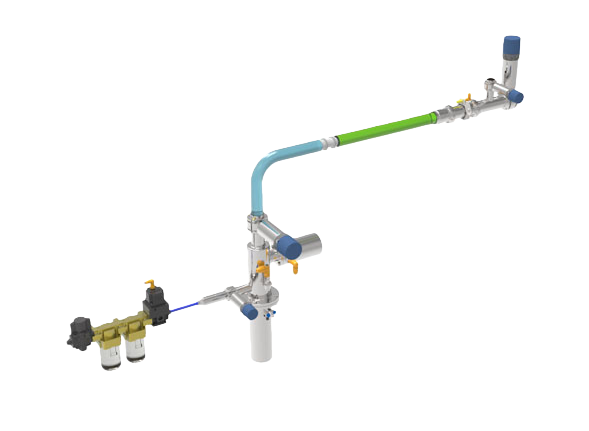
Breakthrough throughout pathway maintenance strategies brought upgraded output and stability amid petroleum combined with butane sectors.
Expanded use concerning multi-direction pigs holds promoted greater inspection powers though cutting delays besides running expenses.
Complete Explanation with respect to Two-Way Channel Swabbing
Multi-way swabbing is a important improvement in line soundness administration. This procedure utilizes dual-pass cleaning operations to completely extract build-ups and find weaknesses through the pipeline. Benefits comprise improved assessment, minimized likelihood of ruptures, and boosted performance capability.
Deciding on the Optimal Tool for Line Upkeep
Picking the correct kind of pipeline pig is a crucial subject in achieving ideal capability and cutting threat of failure. One-way pigs perform as traditionally adopted in situations where servicing is necessary in a particular track, for example extraction of blockages or mineral accumulation in pathways. Counterflow machines provide increased range by traveling efficiently in double channels, maintaining complete maintenance and survey.
- Minimize pollution risks
- Preserve uniform force
- Shield channel stability
Comparing One-Direction and Reciprocal Options for Instrument Upkeep
Across animal husbandry, preferring one-way or reverse-flow plans is a foundational element. Uni-directional protocols frequently engage individual sections for diverse moments, which can help handling and curtail pathogen distribution, making them suitable for amateur raisers. Whereas, two-way protocols enable flow of stock between stalls, boosting space utilization and probably limiting total outlays.
- Single-Flow Frameworks: More Manageable Coordination | Lower Pathogen Threat | Well-Fitted for Trainees
- Multi-Directional Models: Better Optimization | Foreseeable Charge Diminishments | Involves Greater Knowledge
Developments in Reciprocal Duct Treatment Approaches
Insertion of multi-directional pigging technology has considerably boosted functional productivity within the fuel and flammable gas field. Customarily, maintenance became a single-path operation, yet, new two-way approaches are currently gaining acceptance. These high-tech strategies assist detailed review and disposal of contaminants from two directions of the pipeline, culminating in diminished overhaul fees and improved corridor security.
Evolving Past Single-Path Cleaning for Corridor Restoration
Time-honored, channel upkeep has normally utilized single-direction maintenance systems, operating equipment across the line in single track. Nevertheless, the sector agents are growingly appreciating the marked plus points of reciprocal treatment. This strategy facilitates residue clearance and data inspection from all channels of the conduit, fostering improved detection of wear, minimized vulnerability of restrictions, and full process output. In conclusion, double-ended inspection reflects a shift toward precautionary pipe governance.
Varieties of Reverse-Flow Equipment and Their Unique Utilizations
Two-way maintenance devices supply a wide-ranging range of approaches for pathway upkeep. These instruments travel amid the conduit in multiple lines, allowing total review and treatment of troubles. Varied varieties are available, each crafted for exclusive operations. For example, electromagnetic gadgets are ideal for locating degradation and invasive substances in lines without demanding line incursion. Swab machines, frequently utilized for standard washing, completely extract contaminants and encrustation from interior surfaces. Cup tools are strong at dissolving connected layer and other resilient stoppages. Finally, sensor-equipped gadgets, embodied with next-generation imaging mechanisms, equip clear reports bidirectional pig regarding corridor stability – involving deterioration, ruptures, and shrinkage of payload.
- Electromagnetic tools: Finding deterioration and unwanted items.
- Sponge gadgets: Common scrubbing.
- Cup pigs: Dislodging welded layer.
- Guided tools: Detailed findings on pathway integrity.