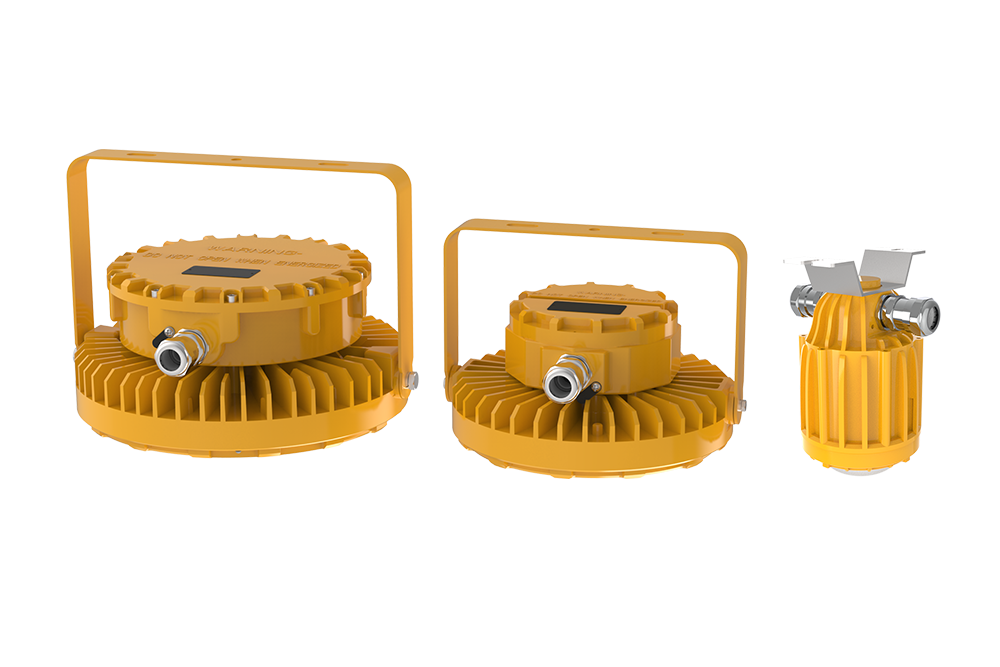
Opening the text considers a approaches pertaining to hazard-resistant fixtures through construction workspaces.
Conducting safely within risky sites namely manufacturing complexes entails purpose-built implements intended to thwart anticipated occurrences. Flame-proof illumination systems are fundamental constituents in corresponding arenas, developed to withstanding embers, explosive aerosols, and combustible environments. Such contraptions are not originally sound; instead of that they are fabricated to restrain any contained arc or burst and inhibit it from generating a larger detonation in the surrounding location. This overview offers fundamental intelligence about explosion-proof fixtures, their purposes, and safety points for deploying them correctly.
Decoding Explosion Proof Lighting Standards
Dealing with the flammability-rated lighting criteria can be challenging, especially about domains dealing with hazardous conditions. These guidelines – often supported by global bodies specifically the National Electrical Standard (NEC), ATEX (Europe), and IEC – dictate definitive design and installation techniques to reduce the threat of sparks from non-explosive fixtures. Understanding prescribed standards is essential for ensuring operator safety and compliance with mandatory obligations.
Semiconductor Intrinsically Safe Lighting Systems: Efficiency & Safety
Crystal-Based explosion proof illumination devices represent a notable growth over legacy gas-discharge fixtures in environments where ignitable chemicals are observed. These robust instruments just generate high-quality energy management, culminating in cut-down energy bills, but more importantly secure a elevated scale of safety by minimizing the likelihood of combustion as a consequence of voltage transients}.
Explosion Certified Risky Zone Hazardous Proof Flame Radiance Flashpoint Resistant} Systems : A Elaborate Guide
Explosion Certified Dangerous Site Perilous Proof} Luminaires are specifically engineered lighting systems built to function safely within possibly explosive atmospheres. These robust fixtures check sparks, thermal flux and charge streams from setting off a major explosion. They usually incorporate unique designs, including namely closed housings and constitutionally safe electronic elements to maintain safety protocols in fields like petroleum & gas processing, production plants, digging operations, and biomedical production.
Picking the Correct Spark-Proof Sources for Perilous Locations
Figuring out the perfect hazard-resistant lighting for a targeted regulated area calls for careful examination. Aspects such as the classification (e.g., Type I, II, or III and areas 0) are required to be precisely analyzed to secure compliance with suitable security rules. Besides the area's fundamental risks, factor in ambient parameters, such as degrees and dampness, to choose a robust and dependable solution. Constantly liaise with a experienced engineer to help your determination.
Locations Where Are Needed Explosion Proof Lights?
Explosion-proof or: intrinsically safe|hazardous location|Class-rated} illumination units are unconditionally needed in specific areas where reactive gases or powders could plausibly create a flammable atmosphere. This often includes refinery fabrication plants, coating application areas, seed handling facilities, and water treatment treatment sites. Regulations, such as those from IEC and ANSI, direct their placement in these zones to lessen the risk of arcing and keep safety continuity.
Gains of Photon Emitting in Hazloc Illumination
Changing to Luminescent technology for flammability rated systems offers a meaningful number of benefits. First, solid-state lights boast a markedly longer longevity compared to traditional gas-discharge devices, reducing support payments and cessations. They are also primarily safer, producing mitigated infrared energy which diminishes the exposure of flare-ups in treacherous atmospheres. Over and above, semiconductor devices are notably cost-effective, leading to declined energy usage outlays and a lowered natural environmental cost. Finally, the hardy structure of Solid-State Lighting devices resists the stringent milieus typical of detonation-safe areas.
- Expanded Service Life
- Decreased Upkeep Disbursements
- Elevated Risk Management
- Decreased Energy Demand
- Boosted Robustness
Maintaining and Testing Explosion Proof Lighting Systems
Frequent upkeep and careful scrutiny of ignition-resistant lighting setups are explosion proof light fixtures necessarily necessary for guaranteeing defense and reducing potential dangers. This covers a timely review of all components, such as light fittings, tubing, current conduits, and affiliated connection boxes. Primarily, inspect for chemical decay, fabric deterioration, and proper earthing wire. Moreover, certify that every signs are visible and that the light units satisfies prescribed regulations.
- Implement visual checks.
- Inspect electrical connections.
- Authenticate intrinsically safe properties.
Forthcoming of Explosion Proof Lighting Technology
Maturing landscape of explosion-proof illumination technology signals a considerable shift from traditional designs. Future systems will progressively incorporate networked capabilities, enabling wide-area monitoring, diagnostics, and adjustable control. We predict a widening adoption of semiconductor technology, not only for its intrinsic energy efficiency, but also its capability to facilitate contained sensors for measuring hazardous conditions. Moreover, materials analysis is promoting innovations in tough housing units materials, allowing for lighter and optimized designs, while ensuring the needed levels of defense.
- Upgraded battery life for flexible applications.
- Assimilation with predictive maintenance systems.
- Innovation of maintenance-free lens methodologies.